

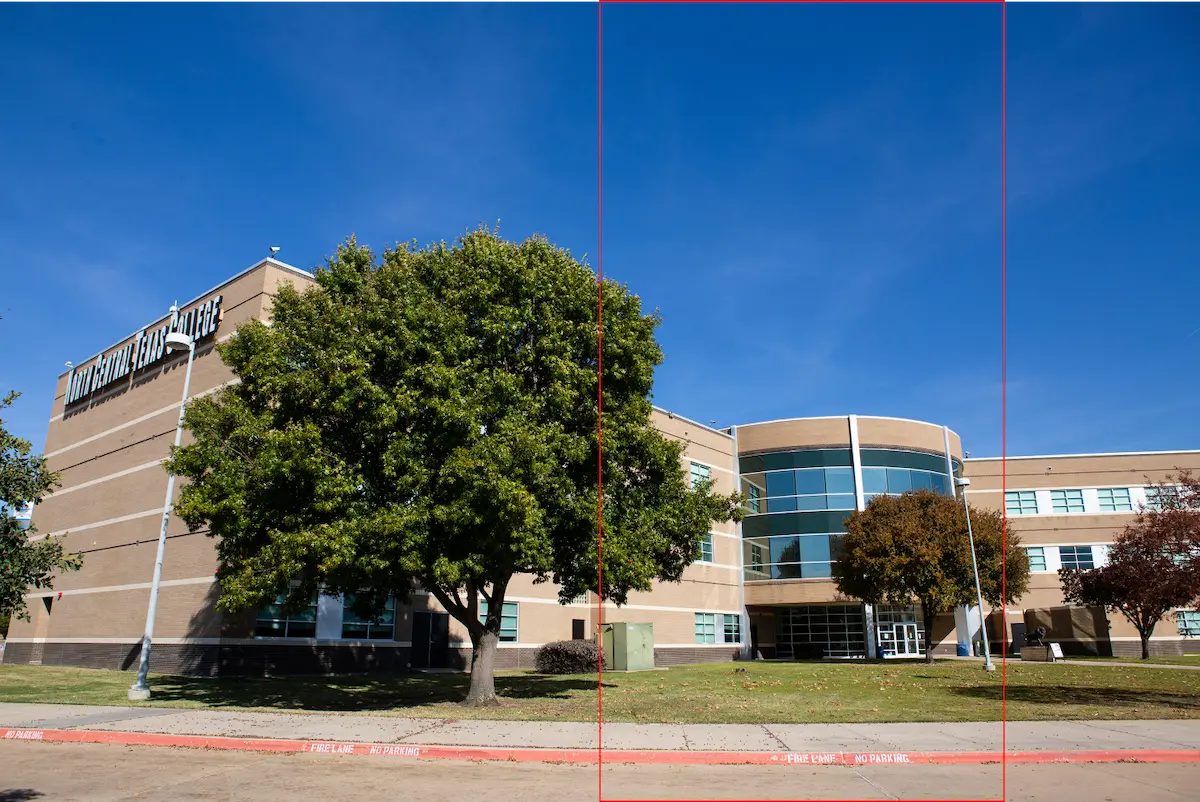

Robeson Excellence in Teaching Award Winners Announced

Thanks to the generous support of former North Central Texas College (NCTC) employee Maurice Robeson Irish, the NCTC Foundation announced the winners of the 2026-2027 Robeson Excellence in Teaching Award. This award provides funding to help NCTC faculty bring innovative ideas to life that enhance student learning and enrich the overall student experience at the college.
Faculty members submitted applications on a variety of creative projects, resources, or initiatives that will make a meaningful difference for NCTC students and their learning experience. The project winners include:
Building a Community of Writers - In a world dominated by artificial intelligence, misinformation, and unrelenting noise, creative and critical thinking has become essential to connecting people and communities to find our common humanity. Our goal with this project is to build a community of creative writers and thinkers in our English classrooms across multiple campuses, through ACE (Adult and Continuing Education) short courses, and through our storied Creativity Awards writing workshop and awards programs.
Faculty: Jacob Arnold & Kristin Weinzapfel
Award Amount: $2,000
Making Math Visible: Expanding Building Thinking Classrooms - Students entering beginning-level math courses often have difficulty connecting abstract procedures to mathematical meaning. Building Thinking Classrooms provides students with opportunities to collaborate and communicate, however, incorporating additional visual and hands-on tools would further expand this approach. Students in college-level courses such as Business Math or College Algebra encounter increasingly complex concepts where ideas are often presented in abstract or symbolic forms. These students also would be benefit from visual tools to make connections and develop conceptual understanding.
Faculty: Jennifer Brown
Award Amount: $2,500
BURDENS Interactive: Historical Choice, Consequence and Inheritance in Canvas - Addresses a persistent problem in survey history: students usually encounter decisions only after their outcomes are known, making the past appear inevitable rather than shaped by choices made within real constraints. The Burdens of Building a Nation (https://edtechbooks.org/nctc_history) was developed through a state open educational resources (OER) grant with NCTC matching support and will be housed in OERTX, Texas’s public OER repository. Its focus on evidence, choice, consequence, and inheritance explains how generations confront conditions they did not create and pass new opportunities and burdens to those that follow. Yet even a strong textbook necessarily presents events after they occurred; it cannot place students within the uncertainty historical actors faced. Students need opportunities to examine evidence available at the time, weigh plausible alternatives, defend a decision, and consider its consequences before discovering what happened. These experiences can reveal how workers, petitioners, Indigenous leaders, writers, organizers, and communities exercised agency despite limited formal power. Creating accessible, multimedia decision- based activities independently requires substantial faculty research and development.
Faculty: Dr. Graham Cox and Charles Adams
Award Amount: $2,500
News to Knowledge: Connecting the Classroom to the World - Campus-wide digital access to The New York Times gives every student, faculty member, and staff member the ability to use information from a widely respected news organization. Access to The New York Times supports mental health, literacy, critical thinking. Students learn through whatever topics pique their interests both inside and outside the classroom. The primary use of the subscription is to access credible information on current and past events.
Faculty: Jill Swarner
Award Amount: $2,704
Practice Beyond the Lab Period: Improving Retention and Success in Anatomy and Physiology and Microbiology - Students learn Human Anatomy and Physiology I and II (BIOL 2401 and 2402) and Microbiology (BIOL 2420) through the materials they handle in lab. Some instructors give traditional practicals at the models; others test with images in the computer lab, where unlabeled models are kept available, because a flat image can be ambiguous and a student who knows a structure in three dimensions can resolve what the picture is showing. Turning a structure in your hands, seeing how it sits against what surrounds it, and viewing it from angles no single photograph provides is what makes that structure recognizable afterward. A student who studies only from images learns to recognize images. A student who has worked with the model recognizes the structure. The Science Department opened the Science Study Area on September 1, 2026, on the Gainesville campus. It is open to all science students during posted hours and requires no appointment and no instructor present. Hours of availability and study area guidelines are posted at the entrance, and students sign in and sign out every visit. This award adds the structures students currently cannot study outside of lab. This project will add approximately eighteen to twenty anatomical and cell models covering the systems these courses address: skeletal, muscular, nervous, cardiovascular, respiratory, digestive, urinary, endocrine, and reproductive, along with the special senses, a disarticulated skeleton for bone-by-bone work, and cross section models that show what a surface view cannot. In addition, five or six laminated wall references and quick reference guides will support Microbiology.
Faculty Member: Sherry Smith
Award Amount: $2,250
Read the Transaction: Authentic Accounting Case Labs for AI-Responsive Accounting Education - Students in computerized accounting courses often approach QuickBooks Online as a series of software steps rather than as an accounting system built from real business transactions. Many students can follow textbook instructions or complete routine exercises, but they struggle when asked to interpret source documents, determine what happened, decide how the transaction should be recorded, and verify whether the financial reports are accurate. The need for this project is to help students move beyond “where do I click?” and toward “what happened, what does it mean, how should it be recorded, and how do I know the reports are correct?” This project will support student learning by strengthening the connection between accounting concepts, source documents, business workflows, accounting systems, and professional judgment.
Faculty: Teresa Oliver
Award Amount: $2,500